

Learning how to layer jewelry is the fastest way to make simple pieces look styled and expensive. The secret is not owning more jewelry. It is knowing how to combine lengths, sizes, textures and metals so every piece has room to shine.
This guide walks you through the basic rules, then shows you exactly how to layer necklaces, rings, bracelets and earrings. You will also learn which chain lengths to buy, how to mix gold and silver, and the common mistakes that make a layered look feel messy.
What Does Layering Jewelry Mean?
Layering jewelry means wearing several pieces of the same type together, such as two or three necklaces, a stack of rings on one hand, or a mix of bracelets on one wrist. Done well, the pieces look like a planned set. Done badly, they look crowded and tangled.
The good news is that layering follows a few simple patterns. Once you learn them, you can build a great look from jewelry you already own.
The 6 Golden Rules of Layering Jewelry
These rules work for every type of jewelry. Keep them in mind and your layers will always look intentional.
1. Start With a Base Piece
Every layered look needs an anchor. This is usually your simplest, most worn piece, like a fine chain, a plain band or a slim bangle. Build everything else around it.
2. Vary the Size and Length
Pieces that are all the same size compete with each other. Mix thin with chunky, short with long, and small with large so the eye moves naturally from one piece to the next.
3. Pick One Focal Point
Let one piece stand out, such as a pendant, a cocktail ring or a wide cuff. Keep the others quieter so they support it instead of fighting for attention.
4. Mix Textures
Combine smooth chains with twisted, beaded or paperclip links. Texture adds depth, even when all your pieces are the same metal.
5. Use Odd Numbers
Three necklaces or three rings usually look more balanced than two or four. Odd numbers feel natural and relaxed.
6. Repeat Something
Repeat a metal, a stone color or a shape across your pieces. That small link ties the whole look together.
How to Layer Necklaces
Necklaces are the most popular pieces to layer, and they are also the easiest to get wrong. The key is spacing.
Choose the Right Chain Lengths
Necklace lengths are measured in inches. Most layered looks use two or three of the lengths below.
| Length | Where it sits | Best use in a layer |
|---|---|---|
| 14 inches (36 cm) | Snug at the base of the neck | Choker, top layer |
| 16 inches (41 cm) | Around the collarbone | Base chain, top layer |
| 18 inches (46 cm) | Just below the collarbone | Middle layer, small pendants |
| 20 inches (51 cm) | A few inches below the collarbone | Middle or lower layer |
| 22 to 24 inches (56 to 61 cm) | Upper chest | Bottom layer, larger pendants |
| 30 inches and longer (76 cm and up) | Center of the chest or lower | Statement bottom layer, over sweaters |
Follow the Two Inch Rule
Leave about 2 inches between each necklace. A classic combination is 16, 18 and 20 inches. This spacing stops chains from sitting on top of each other and keeps each piece visible.
Easy Necklace Layering Combinations
- The everyday trio: a 16 inch plain chain, an 18 inch chain with a small pendant, and a 20 inch textured chain.
- The pearl mix: a 16 inch pearl strand with an 18 inch gold chain and a coin or charm pendant.
- The statement stack: one chunky 18 inch chain paired with a fine 16 inch chain, so the bold piece stays the hero.
- The long and lean look: a 20 inch pendant with a 30 inch chain for sweaters and high necklines.
How to Stop Necklaces From Tangling
- Use chains of different weights, because heavier chains stay in place better.
- Add a necklace layering clasp or spacer, which keeps several chains apart at the back.
- Choose different chain styles, since identical chains twist together more easily.
- Put on the shortest necklace first and the longest last.
How to Layer Rings
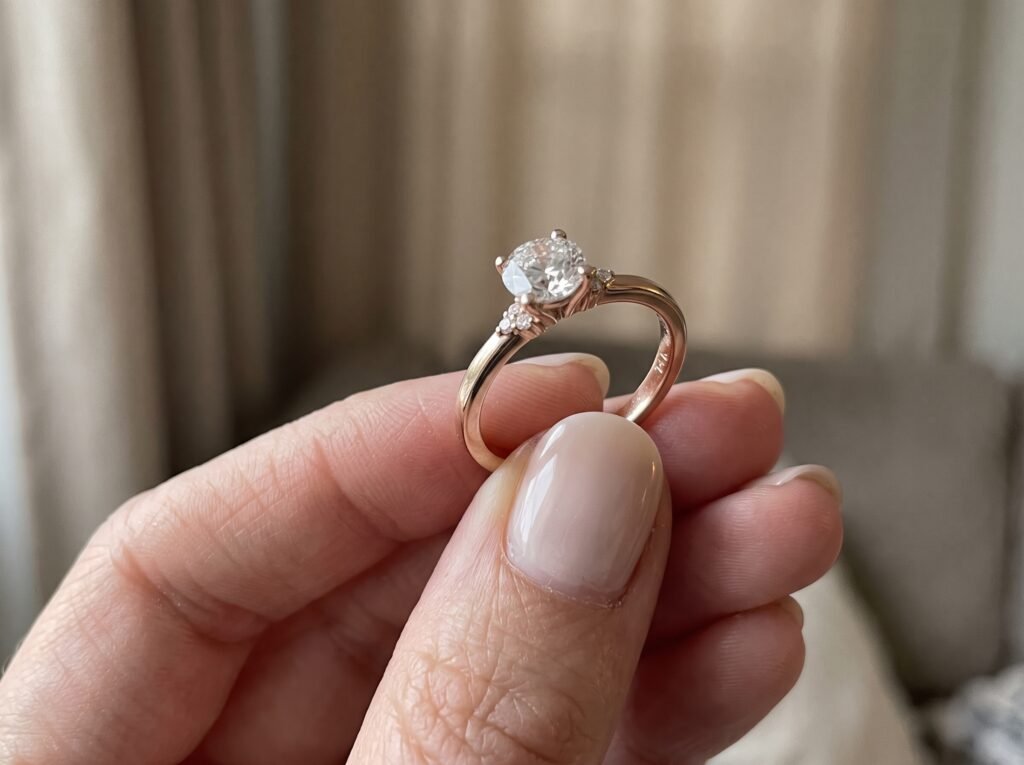
Ring stacking is a fun way to show personality, but comfort and fit matter just as much as style.
How Many Rings Should You Wear?
Start with three to five rings across one hand. Spread them over two or three fingers instead of loading one finger. Leave at least one finger bare so the stack can breathe.
Where to Place Each Ring
- Index finger: a good spot for a bold signet or a statement ring.
- Middle finger: works well for a wider band or a simple stack of two.
- Ring finger: keep it for your engagement ring, wedding band or a delicate stack.
- Pinky: ideal for a small signet or a slim band.
- Midi rings: these sit above the knuckle and add a light, playful touch.
Mix Thin and Wide Bands
Pair one wide or chunky band with one or two thin bands. Combine plain metal with a pavé or gemstone ring so the stack has both shine and texture.
Get the Sizing Right for a Stack
Several rings on one finger feel tighter than a single ring, so a stacked finger often needs a slightly larger size. Before buying, measure your ring size with a fabric tape measure or use plastic sizing rings to test a few sizes together. If you wear a common size, our guide to the size 7 ring explains how that size usually fits.
Measure at the end of the day, when your fingers are at their largest. If a stack ever feels stuck, try our tips for loosening a tight ring. If a ring slides around and breaks up your stack, see how to make a ring smaller.
How to Layer Bracelets
A wrist stack is one of the easiest ways to start layering. Follow these simple steps:
- Start with a watch or a cuff as your anchor piece.
- Add one or two slim pieces, such as a thin chain bracelet or a tennis bracelet.
- Bring in texture with a beaded or woven bracelet.
- Stop at three to five pieces so your wrist still moves freely.
Keep your stack on one wrist and leave the other wrist bare or with just a watch. If you wear a watch, put softer bracelets next to it to protect the face from scratches.
How to Layer Earrings
An ear stack, sometimes called a curated ear, uses several piercings to create a layered look.
- Place the largest earring in the first lobe piercing and go smaller as you move up the ear.
- Mix shapes, such as a small hoop, a stud and a tiny huggie.
- Stick to one or two metals to keep the look clean.
- If you only have one piercing, try an ear cuff for a layered effect without a new hole.
How to Mix Metals When Layering
Mixing gold, silver and rose gold is fully in style. Here is how to make it look deliberate:
- Choose a dominant metal and use the second metal as an accent.
- Add a two tone piece that contains both metals, so the mix feels connected.
- Spread each metal around instead of grouping all gold on one side and all silver on the other.
- Keep the style consistent, such as all minimal pieces or all chunky pieces, even when the metals change.
How to Layer Jewelry for Men
Layering is not just for women. Men can use the same rules with a simpler, more relaxed approach.
- Wear one chain on its own, or two chains of clearly different lengths and thicknesses.
- Stack a watch with one or two beaded or leather bracelets.
- Try a signet ring on the index or pinky finger with a plain band on the other hand.
A pinky signet is one of the easiest pieces to start with. Check the average men’s pinky ring size before you buy one so it sits comfortably.
How to Layer Necklaces for Every Neckline
Your top changes how layered necklaces look. Use this quick guide:
| Neckline | Best layering style |
|---|---|
| V neck | Shorter chains and a pendant that follows the V shape |
| Crew neck | Longer chains that sit over the fabric, or a short layer above it |
| Scoop neck | Two or three fine chains that fill the open space |
| Strapless or off the shoulder | Chokers and collar length chains near the neck |
| Turtleneck | Long chains and pendants worn over the top |
| Button up shirt | A short chain at the open collar, or chains over a fully buttoned shirt |
Common Layering Mistakes to Avoid
- Using chains of the same length, which makes them tangle and hide each other.
- Wearing too many statement pieces at once, so nothing stands out.
- Ignoring proportion, like wearing delicate chains with a very chunky knit.
- Wearing rings that are too tight, which is uncomfortable and can cause swelling.
- Layering every area at once, such as full necklace, ring, bracelet and ear stacks together. Pick one or two areas to highlight.
Jewelry Layering Trends Right Now
Right now, layering has become more thoughtful. Instead of five or more fine chains, stylists are pairing one bold piece with one or two delicate ones. Mixed metals, textured gold chains, baroque pearls and personal charms are the most popular pieces to layer this season. The goal is a smaller stack that feels personal rather than busy.
Frequently Asked Questions
How many necklaces should you layer?
Two or three necklaces is the sweet spot for most people. Three gives a full, balanced look without tangling.
What is the best chain length combination for layering?
A combination of 16, 18 and 20 inches works for most people. It follows the two inch rule and suits most necklines.
Can you layer gold and silver jewelry together?
Yes. Mixing metals is fully in style. Pick one dominant metal and add a two tone piece to tie the look together.
How do you keep layered necklaces from tangling?
Use different lengths, weights and chain styles, and try a layering clasp that keeps the chains separated at the back.
How many rings is too many?
There is no strict limit, but three to five rings on one hand usually looks balanced. Spread them across fingers and leave at least one finger bare.
Should stacked rings be a bigger size?
Often, yes. Several rings on one finger feel tighter than one ring, so many people go up slightly for a stacked finger, especially with wide bands.
Final Thoughts
Knowing how to layer jewelry comes down to a few simple ideas: start with a base piece, vary your sizes and lengths, choose one focal point and repeat a detail to tie it all together. Begin with pieces you already own, try a three piece necklace stack or a simple ring stack, and adjust until it feels like you.
Most of all, make sure every piece fits comfortably. Layered jewelry should look effortless and feel that way too.
