

Most tight rings can be loosened at home in a few minutes: raise your hand above your heart, cool the finger, add a slippery lubricant such as dish soap, then twist the ring off slowly instead of pulling. If that does not work, the dental floss method usually does. If your finger is numb, very swollen or turning pale, blue or dark, stop and get medical help straight away.
This guide explains why rings suddenly feel tight, seven safe ways to get a stuck ring off, what to avoid, and how to make the ring fit comfortably again once it is off.
Why Your Ring Suddenly Feels Tight
A ring rarely shrinks. In almost every case the finger has swollen, or the knuckle has grown over time. Common causes include:
- Heat and humidity: warm weather, hot showers and saunas make fingers swell.
- Salty food and alcohol: both make the body hold on to water for a few hours.
- Exercise and flying: blood flows to the hands during a workout, and cabin pressure can cause mild swelling.
- Pregnancy: fluid retention often makes rings tight, especially later in pregnancy.
- Weight gain: fingers gain size along with the rest of the body.
- Arthritis or larger knuckles: the ring may fit the base of the finger but no longer pass the knuckle.
- An injury: a bump, insect bite or sprain can swell a finger quickly.
First, Check If It Is an Emergency
A tight ring is usually just uncomfortable. It becomes urgent when it starts to cut off blood flow. Stop trying to remove it yourself and go to urgent care or an emergency room if you notice any of these signs:
- The finger is pale, blue, purple or dark.
- The finger feels numb, tingly or cold.
- Pain is severe or getting worse.
- Swelling keeps increasing even after you raise and cool your hand.
- You think the finger may be injured or broken.
Medical staff have ring cutters and other tools to remove a ring safely. A jeweler can usually repair a ring that has been cut, so saving the finger always comes first.
7 Safe Ways to Loosen a Tight Ring
Try these in order. Most people only need the first three or four.
1. Raise Your Hand Above Your Heart
Hold your hand above your head for 5 to 10 minutes. Gravity helps fluid drain out of the finger, which brings the swelling down. Resting your arm on a pile of pillows works if you are lying down.
2. Cool the Finger
Run cool water over your hand, or hold a cold pack wrapped in a thin cloth against the finger for a few minutes. Cold helps the swelling go down. Never put ice straight onto the skin, and avoid hot water, which makes swelling worse.
3. Use a Lubricant
Coat the finger and the ring with something slippery so the band slides more easily. Good options you probably already have:
- Dish soap or hand soap mixed with a little water
- Hand lotion or moisturizer
- Petroleum jelly or lip balm
- Baby oil, olive oil or coconut oil
- Conditioner
Wash the ring afterwards with warm soapy water and a soft brush, because oily products can dull stones and leave a film.
4. Twist, Do Not Pull
Turn the ring slowly back and forth while easing it toward the fingertip. Use your other hand to gently push the skin on the far side of the knuckle back toward the hand. Short, patient twists work far better than one hard pull.
5. Raise, Cool and Try Again
If the ring gets stuck at the knuckle, stop, raise your hand and cool it again for a few minutes, then add more lubricant and repeat. Taking a break stops the knuckle from swelling more from repeated rubbing.
6. Try the Dental Floss Method
This method compresses the swelling so the ring can slide over it. It works well for rings that will not pass the knuckle.
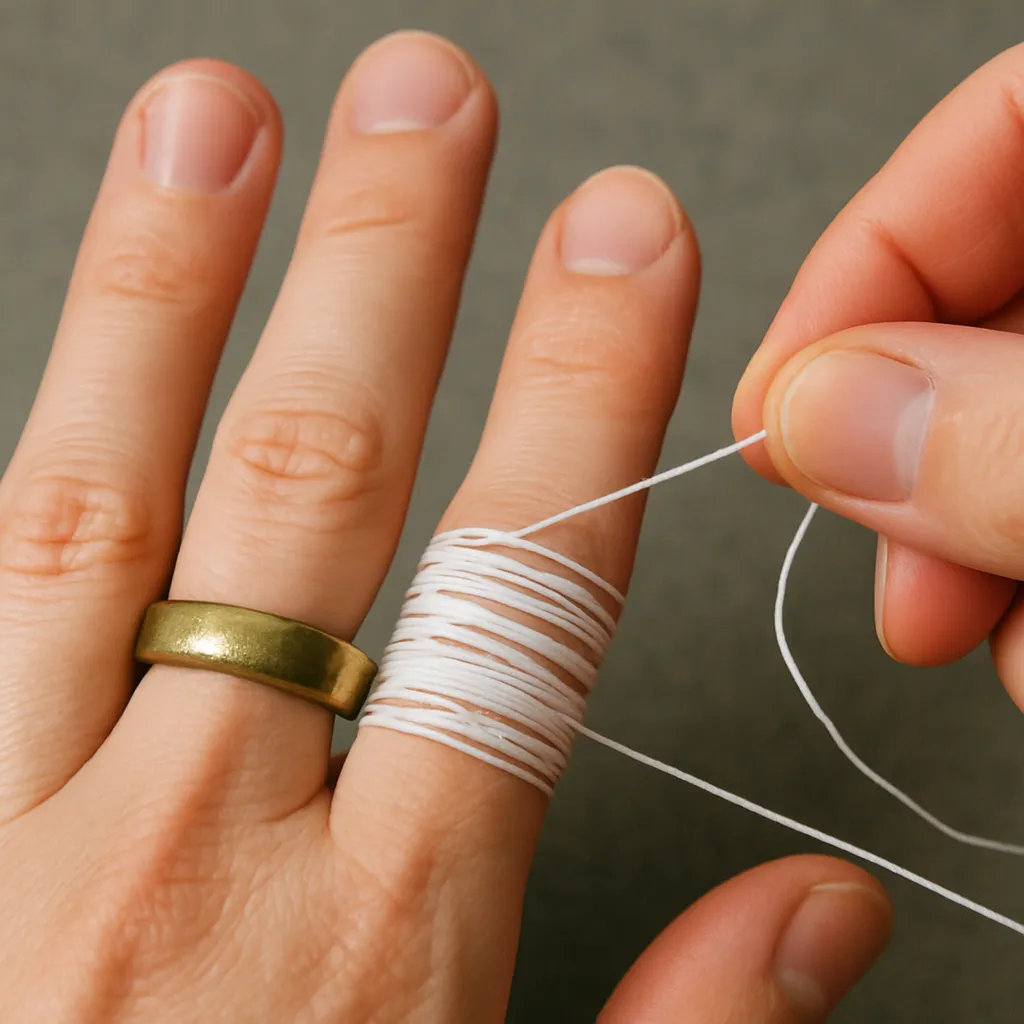
- Slide one end of a long piece of dental floss, thread or thin ribbon under the ring, from the hand side toward the fingertip.
- Wrap the long end firmly around the finger, starting right next to the ring and moving toward the fingertip. Keep the coils close together and snug, but not painful.
- Take the short end that is under the ring and slowly unwind it toward the fingertip. As it unwinds, it pushes the ring forward over the wrapped finger.
- Repeat if needed, and stop at once if the finger changes color or hurts.
7. Wait for the Swelling to Go Down
If the ring is only uncomfortable and your finger looks normal, sometimes the best fix is time. Drink water, avoid salty food, keep your hand raised and try again in a few hours. Fingers are usually smaller in cool conditions.
What Not to Do
- Do not yank the ring. Hard pulling bruises the knuckle and makes it swell more.
- Do not use hot water. Heat increases swelling.
- Do not try to cut the ring yourself with household tools. It is easy to injure the finger.
- Do not keep trying for a long time if the finger is getting more swollen or changing color. Get help instead.
Once It Is Off: Make the Ring Fit Again
If your ring was tight only on a hot day or after a salty meal, it probably fits fine and you do not need to change it. If it feels tight most days, it is time to adjust the size.
| Cause | Will it pass? | Best next step |
|---|---|---|
| Heat, salt, exercise or flying | Yes, within hours | Wait, then wear the ring as normal |
| Pregnancy | Usually, after the baby is born | Take the ring off early and wear it on a chain for now |
| Weight gain | Sometimes | Measure again and consider resizing |
| Arthritis or larger knuckles | No | Resize up, or ask about a hinged or adjustable shank |
| Injury | Yes, once healed | Leave the ring off until the swelling is gone |
Before resizing, measure your finger at the end of the day when it is at its normal largest size. Our guide on how to measure ring size with a fabric tape measure shows how, and our free ring size chart calculator turns that measurement into your size.
Most gold, silver and platinum rings can be made one or two sizes larger. Learn more in can you make a ring bigger, and check which rings can and cannot be changed in can rings be resized. If you are worried about your ring, read does resizing a ring damage it, and see how long it takes to get a ring resized before you book.
How to Stop a Ring From Getting Stuck Again
- Take rings off before workouts, long flights, hot baths and saunas.
- Remove rings at the first sign of swelling, such as after an injury or during pregnancy.
- Choose a comfort fit band, which has a rounded inside edge and slides over the knuckle more easily.
- Allow a little extra room for wide bands of 6 mm or more, which feel tighter than thin ones.
- Check your size once a year, or after big changes in weight or health.
Frequently Asked Questions
What is the fastest way to loosen a tight ring?
Raise your hand above your heart for a few minutes, cool the finger, coat it with dish soap or lotion, then twist the ring off slowly.
Does Windex really help get a ring off?
Some people use glass cleaner because it is slippery, but soap, lotion or oil work just as well and are gentler on skin. Wash your hands well afterwards.
Why is my ring tight in the morning?
Fluid can collect in the hands overnight, especially after a salty meal or alcohol. The swelling usually goes down within an hour or two of getting up.
When should I go to a doctor for a stuck ring?
Go straight away if the finger is numb, very painful, pale, blue or dark, or if the swelling keeps getting worse. Medical staff can remove the ring safely.
Can a ring that was cut off be repaired?
Usually, yes. A jeweler can join the band again and often resize it at the same time.
If your rings are often tight because of arthritis or swelling, read our guide to ring size for swollen fingers and arthritis for long term fixes.
Final Thoughts
A tight ring is almost always caused by swelling, and it can usually be removed with patience: raise the hand, cool it, add a lubricant and twist slowly. The floss method helps when the knuckle is the problem. If the finger shows any sign of poor blood flow, get medical help right away.
Once the ring is off, measure your finger at the end of the day. If the ring is tight most of the time, a jeweler can resize it so it fits comfortably every day.