

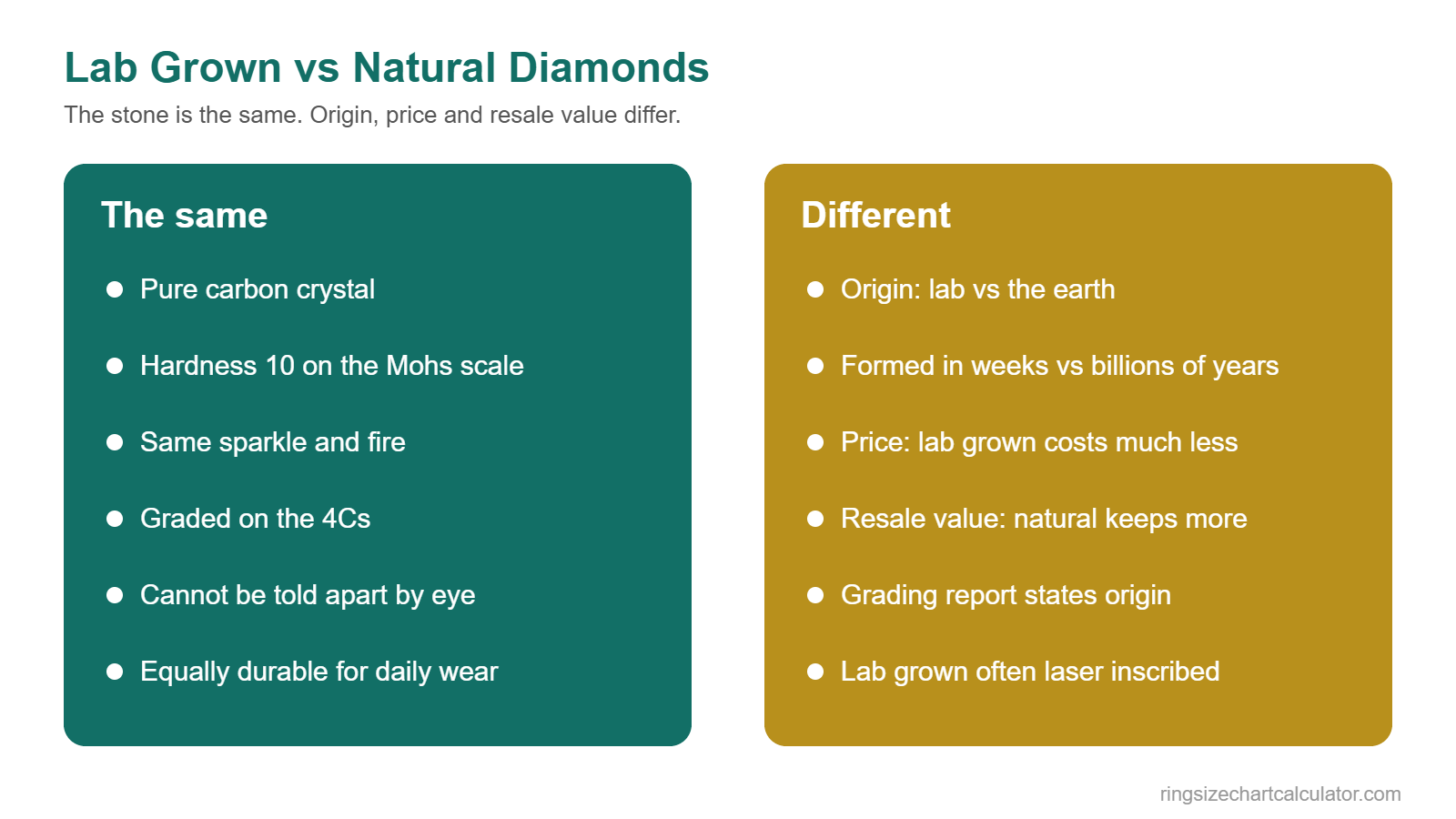
Lab grown and natural diamonds are the same material: both are pure carbon with the same hardness, sparkle and chemical makeup, and you cannot tell them apart by eye. The real differences are origin, price and resale value. A lab grown diamond is made in weeks and usually costs far less for the same size and quality, while a natural diamond formed over billions of years, costs more and keeps more of its value if you sell it. Choose lab grown for the biggest, best stone on your budget, and natural if rarity and long term value matter most to you.
This guide explains how each type is made, compares them side by side, and covers grading, buying tips and ring sizing so you can choose with confidence.
Lab Grown vs Natural Diamonds at a Glance
| Feature | Lab grown diamond | Natural diamond |
|---|---|---|
| Material | Pure carbon crystal | Pure carbon crystal |
| Hardness | 10 on the Mohs scale | 10 on the Mohs scale |
| Looks and sparkle | Identical when cut to the same quality | Identical when cut to the same quality |
| How it forms | Grown in a lab in a few weeks | Formed deep in the earth over billions of years |
| Price for the same specs | Usually much lower, often a fraction of the price | Higher |
| Resale value | Low | Higher, though still below the purchase price |
| Grading | Graded on the 4Cs by major labs | Graded on the 4Cs by major labs |
| Can you tell by eye? | No | No |
Prices change often, so compare current quotes for the exact carat, color, clarity and cut you want.
How Lab Grown Diamonds Are Made
Lab grown diamonds start from a tiny diamond seed. Two main methods are used:
- CVD (chemical vapor deposition): carbon rich gas is heated in a vacuum chamber, and carbon atoms build up on the seed layer by layer.
- HPHT (high pressure, high temperature): carbon is placed under the kind of heat and pressure found deep in the earth, so it crystallizes around the seed.
Both methods make real diamonds. They are not simulants like cubic zirconia or moissanite, which are different materials.
How Natural Diamonds Form
Natural diamonds form deep under the earth’s surface, where heat and pressure turn carbon into crystal over billions of years. Volcanic eruptions carry them closer to the surface, where they are mined, cut and polished. Their rarity and age are a big part of their appeal and price.
Price and Resale Value
The biggest practical difference is cost. For the same carat, color, clarity and cut, a lab grown diamond usually costs a fraction of a natural one, so the same budget buys a larger or higher quality stone.
Resale is the other side of that. Natural diamonds usually resell for well below what you paid, and lab grown diamonds resell for much less again, because supply keeps growing and prices keep falling. If you see an engagement ring as something to keep for life, resale may not matter much. If you think you might sell it one day, natural is the safer choice.
Grading and Certificates
Both types are graded on the same 4Cs: cut, color, clarity and carat. Major labs issue reports for both, and lab grown reports clearly state that the stone is laboratory grown. Many lab grown diamonds are also laser inscribed on the edge of the stone, which you can see under magnification.
- Always ask for an independent grading report.
- Check that the report number matches the inscription on the stone.
- Make sure the seller clearly discloses whether the diamond is lab grown or natural.
Which Should You Choose?
- Choose lab grown if you want the biggest, best looking stone for your budget and do not plan to sell it.
- Choose natural if rarity, tradition and long term value matter most to you.
- Either way, focus on cut quality, which has the biggest effect on sparkle.
Sizing and Caring for Your Diamond Ring
The diamond type does not change how you size the ring. Measure carefully, at the end of the day, and use our free ring size chart calculator to convert your measurement. If the ring is a surprise, these tips on how to find someone’s ring size secretly will help.
- For metal choice and how karat affects wear, see our gold and fine jewelry sizing guide.
- Rings with stones all the way around are hard to resize. Read can rings be resized before choosing an eternity band.
- Keep the stone sparkling with our guide on how to clean gold, silver and diamond rings at home.
- To see which hand and order to wear your rings in, read engagement ring and wedding ring: which hand.
Frequently Asked Questions
Are lab grown diamonds real diamonds?
Yes. They have the same chemical makeup, crystal structure and hardness as natural diamonds. Only their origin is different.
Can a jeweler tell if a diamond is lab grown?
Not by eye or with a simple loupe. Telling them apart needs specialist lab equipment, which is why grading reports and inscriptions matter.
Do lab grown diamonds get cloudy or lose their sparkle?
No. A lab grown diamond is as durable as a natural one and keeps its sparkle. Any dullness comes from dirt and oils, which a gentle clean removes.
Why are lab grown diamonds cheaper?
They can be produced in weeks in large numbers, while natural diamonds are rare and costly to mine.
Is a lab grown diamond a good engagement ring choice?
Many couples choose one to get a larger or higher quality stone for their budget. It is a good choice if you plan to keep the ring rather than sell it.
Final Thoughts
Lab grown and natural diamonds look and wear the same. Lab grown gives you more diamond for your money, while natural offers rarity and better resale value. Decide which matters more to you, insist on an independent grading report, and size the ring carefully before you buy.
